Every parent has said it at one time or another.
“I can’t imagine how I would go on, if one of my children was killed.”
Or words to that effect…
While most peoples’ children are still safe, this devastation, utter emotional destruction, and havoc have been visited upon us, very close to home. Patrick Bundock has been a dear and close friend, indeed an adopted sibling, for nearly all of my adult life and last week, the life of his youngest son, 19-year-old Connor Bundock, was taken from him in a senseless murder in Santa Rosa, California.
But what’s even more senseless than that is the utterly apathetic reaction of the people around the country to this flagrant act of violence. Except for a local newspaper, there’s been virtually zero coverage of the murder in the media.
I am continually befuddled by what passes for emotions in the twenty-first century USA. 400,000 people are killed by medical malpractice and we don’t even notice. 20,000 killed in cars every year and, “Yawn…”
When known career criminals are accidentally or negligently killed by the police, one of those people who actually risk their own lives to keep us safe? OUTRAGE! We riot, shut down cities, burn and destroy property, and harm other Humans.
Because we are OUTRAGED.
But a nice, polite, 19-year-old kid who never bothered anyone and was in fact known to be very protective of his eclectic collection of friends, is murdered in a public park in broad daylight by two wannabe thugs with suspected gang affiliations/ambitions and the best we can do is,
“That’s so sad.”
Apparently, Connor being young and innocent wasn’t enough for his murder to outrage us.
Him being in a public park, where our children play, with friends minding his own business wasn’t enough for his murder to outrage us.
Do we need a racial motivation? Connor is half Thai; his mother Chalita is from Thailand.
Not good enough either, apparently.
His killers are reported to be Latino men. Do they get a “free pass” because of their status as “minorities”?
To have so close a friend lose a child like this is devastating.
For there to be so little emotional reaction by the public when we have so recently demonstrated our capacity for loud and violent emotional responses to senseless death is just plain depressing.
And now let’s take a moment to call a spade a BLEEPING shovel:
Knowing that Connor was an “Asian-American” kid, if he had been shot by a police officer (especially a white cop), we know from experience that the reaction would have been much different. Much more emotional. Much more exciting. Much LOUDER.
The public’s lack of response response to this senseless murder is as if we’re saying to Connor’s mother Chalita, father Patrick, and brother Guiness and the rest of Connor’s family:

Outrageous lack of outrage at the murder of a fine young man
“You’re so lucky Connor wasn’t shot by a cop.”
So I ask you…
Yes, YOU! The “oh-that’s-so-sad-another-gang-shooting-I-wish-our-parks-were-more-safe-but-what-can-I-do-about-it?” milquetoast apathetic utterly and completely invertebrate responders…
In what universe is this supposed to make the Bundock family feel better? Or Connor’s brother Guiness? Connor’s friends, teachers, coworkers?
Is he somehow less dead because he was shot by a criminal?
YOU are the focus of my OUTRAGE today. What are you thinking? WHY aren’t you outraged?
There is one thing we can say with great certainty about Connor Bundock’s life:
It mattered.
It matter to him. It mattered to his family. It mattered to his friends and his parents’ friends.
Most importantly perhaps, it mattered TO HIM, but not more than the safety of his friends.
So getting back to the beginning, The members of the Bundock family are “going on.” How, you ask? Well to begin with, like Connor, they are made of some pretty substantial stuff.
And they know that not to go on would waste more than just Connor’s life.
Going on has a cost, however. When you have your own small business and you have to stop everything just to help keep things together for the surviving members of your family, in most cases your income stops. Add to that the substantial cost of funeral arrangements and you have what we call a “hardship.”
For this reason, friends of the Bundocks have started a GoFundMe campaign to help with expenses. Please be generous.
Reporter Colin Atagi of the local “Press Democrat” newspaper published this article about the murder: “Man Killed in Santa Rosa Park…”
Thanks for reading.
cma
 The National Football League (NFL) is apparently considering trying to resurrect the failed doctrine of “Separate but Equal.”
“Separate but Equal” was a legal doctrine used in the United States to justify segregation of black people from white people. From public schools to teacher salaries to public restrooms and drinking fountains, this legal theory held that segregation was OK as long as the separate facilities were “equal.”
What turned out to be the case most of the time was that the “separate” facilities were seldom “equal” and usually far from it.
The concept died an ignominious and well-deserved death after several Supreme Court decisions starting in the 1950’s under the leadership of Chief Justice Earl Warren.
In the wake of the tragic incident where George Floyd was killed by Minneapolis Police Officers, the cause of which lies somewhere between “criminal negligence” and “First Degree Murder,” and the (very justified) protests and the unjustified illegal looting and rioting, the NFL has decided to play a song known as “The Black National Anthem” (“Lift Every Voice and Sing”) before games this year as some sort of gesture of reconciliation. The same NFL that refused to allow players to display the names and other memorials of Police Officers murdered in the line of duty, now says it plans to allow players to display names and memorials for victims of police violence.
In an earlier Diatribe (http://www.dailydiatribe.net/the-ignorant-usa/#more-828) I pointed out the hypocrisy of players like Colin Kaepernick kneeling during the National Anthem, and the legal right of the NFL to forbid it. Now the NFL seems to have let their pendulum swing even further in the opposite direction.
Playing the National Anthem of the United States i.e. “The Star Spangled Banner” is a custom that is meant to Continue reading
There is a growing movement and a rising chorus of voices who believe “capitalism” is the root of our social and economic problems in the United States. This idea is being used to promote socialism as the better path for our nation to take.
I would say to these people…
While I disagree that what you think is capitalism is the problem, I agree that capitalism IS the problem.
I would also invite them to actually pay attention to the plight of people who have, in the past, “adopted” socialism either by force or by “choice.”
They universally became, and most still are, miserable.
Does anyone else remember seeing the banking propaganda films in school where the kid earns a dollar mowing a lawn, deposits it faithfully in his savings account, and we follow that dollar as the bank loans it to someone, they then spend it in the local economy, supporting local business, etc.?
It was supposedly designed to help us understand how banking and the economy works.
But it’s a lie.
Really, are we so math challenged that we believe “bankers dwell in marble halls” and become so obscenely rich by borrowing money from savers at 2% and loaning out at 7% to home buyers???
Any mildly analytical look at just the infrastructure (buildings, computer systems, furniture, etc.) and overhead (salaries, employee benefits, leases, advertising, utilities, security, etc.) of a bank would demonstrate to any thinking person that this is IMPOSSIBLE.
The problem with arguments about “capitalism” in the USA is that they are so tainted by the brainwashing of the education system that we do not even know the real meaning of the word “capitalism.” People on both sides, “for” and “against,” misunderstand the word so grotesquely that the very spirited arguments between them become just so much noise.
Detractors and protractors alike would explain “capitalism” as a “system whereby free market forces are allowed to control the economy without interference from the government…” or some such (They may allow, in their theories of “capitalism,” for some controls or monopolies in certain sectors such as “utilities” or “alcohol, tobacco, and firearms” because it is in the “public interest”).
What they’re really describing is a Free Market Economy. Capitalism is something else entirely!
Free markets, left to their own devices, are self-correcting when money is honest and has intrinsic value, according to the (correct) “law of supply and demand” we all learned in school.
One side argues that this “free market economy” has been tried for 250 years but has failed.
And they’re wrong. Our nation prospered and became history’s biggest economic powerhouse for just this reason. We started going downhill when we signed up for a private central bank that creates money out of thin air for its own profit.
The other side argues “capitalism” hasn’t been given a fair shake because of all the meddling regulation of agencies and bureaucrats. And because of government benefits like welfare and foodstamps.
And they’re also mostly wrong.
Once one specially privileged portion of the economy is allowed to create money out of nothing (“capital creation”), an artificial advantage both economically and politically is placed in their hands (the banks and their owners). The more money they create, the greater both inflation and their political influence becomes until laws are created, not to protect the people, but rather to increase the profits and power of “the banks and corporations.”
This real “capitalism” is the worst kind of economic enemy. It insidiously enrichens and empowers a select few while enslaving the future with greater and greater tax burdens to pay the unpayable debt. Furthermore, with virtually unlimited capital to work with, they are able to buy up all the movie studios, newspapers, television networks, radio networks, etc. to give them nearly complete control of the information received on a daily basis by the general public. Add to that the control over education they get in exchange for school funding and “higher” education grants, and the control of the public mind is nearly complete.
We love to debate the federal budget and “deficit spending.”
Deficit spending would be impossible without the Federal Reserve to create money out of thin air to loan the Federal Government.
Why don’t we have substantive discussions on the real tangible problem of the Federal Government, which most people would agree is actually the NATIONAL DEBT? Well it could be because the 14th Amendment includes the line,
…validity of the public debt of the United State, authorized by law, …shall not be questioned…”
The number of Americans who have even heard of this clause, let alone grappled with its true purpose, is miniscule but for those who have, I’d like to ask, “Do you really buy the story that it was to prevent post-Civil War congresses, potentially dominated by Southern Democrats, from repudiating the Federal debts, some of which was in the form of pensions to Union Military Veterans?”
I mean really. They (supposedly) intentionally amended the Constitution, in the guise of protecting veterans, in a way that just happens to protect the banking cartel? FOREVER??? Are we seriously THAT gullible? Well, for the record, Congress was still arguing about Civil War Pensions until nearly 1900 (the war ended in 1865) so I guess this part of this CONSTITUTIONAL AMENDMENT didn’t do what it was supposed to do.
Sure ended up a good deal for the bankers though….
If you think that was a simple coincidence, can I interest you in some swampland, or perhaps a bridge?
Or are you beginning to see the more insidious and sinister purpose behind central banking and “capitalism”? That the great tragedy might have been, (gasp!), that the banks didn’t get paid? (Insert “Sarcasm” emoticon here).
The longer term effect/purpose (I mean Civil War vets were going to die eventually, right? There wasn’t really a need to EXEMPT the banking industry from questions about Government debt FOREVER just to protect Civil War Vets, was there?) ended up being to allow banks to continue to loan money unfettered to irresponsible Congresses and it would, henceforth and forevermore, be Unconstitutional to even ask whether those loans had been made in good faith. It wasn’t long after that, “they” started working on the “Federal Reserve Act” which gave the cabal unrestricted license to create money out of thin air and loan it to the government and others.
Allow me to repeat something I’ve written before in the hope it will sink in to the hearts of some more people:
Article I Section 10 of our Constitution commands that:
Congress Shall have Power to Coin Money, and regulate the value thereof.
The Treasury is supposed to arrange the logistical support to this endeavor by minting coins and (yick!) printing paper (and now digital) dollars, but it’s supposed to be done on the specific authority of Congress.
Our Congress became derelict in this duty, assisted by co-conspirator President Woodrow Wilson, when they passed the Federal Reserve Act of 1913 and subordinated that responsibility to the privately-owned and decidedly non-government organization known as the “Federal Reserve System.” It is interesting irony that President Wilson was elected in 1912, largely on the strength of a campaign slogan: “He kept us out of the war.” (World War I)
Why is the Federal Reserve Act important? Consider this:
The Treasury can print a $100 bill and the government can spend it. The result is a certain amount of inflation.
If the Federal Reserve prints a $100 bill and the government spends it, the same inflation results but, (and this is a HUGE “but”), the Federal Government, which is to say the PEOPLE of the United States, now owe that $100 plus interest to the Federal Reserve System.
Why would we ever agree to a deal like this? Well, “we” did and no one in the government can seriously question it due to the restrictions of the 14thAmendment and the unimaginable reach of the power of the Banking Cartel, which (privately) owns the Federal Reserve.
They keep us fighting among ourselves over the “cause” of economic inequality by generating arguments that (insert name of “successful” entrepreneur here) takes undue advantage of the people, or “big business” doesn’t pay it’s share, or “the rich” get all the breaks.”
Or whatever.
But funny how the discussion never leads to the real cause of the problems. Names like Rothschild, Schiff, Morgan, Warburg, Rockefeller, etc. just seldom seem to come up. If they do, it’s with some weird deferential respect like that one owes to a professor or retired statesman or something.
THESE ARE THE PEOPLE laughing all the way to the…
Well, you know.
Except they ARE the…
Nevermind.
The biggest obstacle to helping people understand this sort of thing is cognitive dissonance. The incredible scope of the fraud and it’s extremely long-term, multigenerational nature, is simply beyond their ability (I think willingness!) to grasp. Some of the smartest people I know roll back their eyes and raise their hands in surrender to the seemingly incomprehensible subject matter that will help them understand so much that has happened in the history of our world.
Can we please admit that some people are more capable than others and that some of them will just naturally be more successful than others? It’s funny that the Socialists want to force us at gunpoint to accept the concept of “evolution” but economically speaking, they demand that we completely discard the very Darwinian theory of “survival of the fittest.”
So to summarize:
Some of us will naturally succeed more than others (personally, I’m still trying to earn membership in this exclusive “club”). In order to protect their wealth and power, the people with the original, largest, government subsidy of their business avoid, virtually completely, any attention to the unlimited number of Aces they’ve been dealt by brainwashing us and pitting, in a jealous rage, the less prosperous among us against the most successful among us.
We perpetuate the process by continuing to argue points that are not really relevant to the CORE PROBLEM.
We might as well try to improve health and nutrition by studying the recorded debates among cannibals over the relative delicacy of Caucasian ears versus Caucasian noses.
It has been proven over hundreds of years, multiple generations, millions of conversation (tens of thousands by me personally), that essays like this are extremely unlikely to generate any further interest in the subject.
But on the off chance…
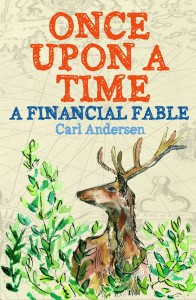
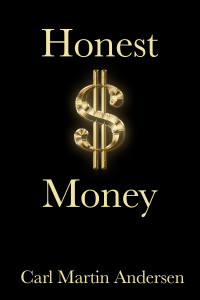 Here are a couple of Books I wrote on the subject.
And a previous blog:
Daily Diatribe – “Money Defined”
Thanks for reading.
cma
A high school friend of mine posted on Facebook, in a discussion about the border wall and immigration in general, the assertion that, “we now know… that most people in the country illegally have simply overstayed legal visas of one kind or another.”
My Facebook reply became so long and detailed that I decided to share it on dailydiatribe.net. This has the dual advantages of making it available to a broader audience and also helping me honor my resolution to avoid talking politics on Facebook. It’s a bit more of a “stream of consciousness” than my usual articles but… Continue reading
23 October 2018
Dear President Trump,
While I know I’m not your official speech writer, I submit the following, regarding the “caravan” approaching our Southern border, for your consideration.
Wait until the caravan is less than 24 hours from our border (to limit the time available to supporters of the caravan to prepare for reaching the border), call a press conference, and deliver the following speech:
This is a message for the hopeful immigrants, criminals, terrorists, and others in the so-called “caravan” approaching the US Border in Texas. Continue reading

Recent Comments